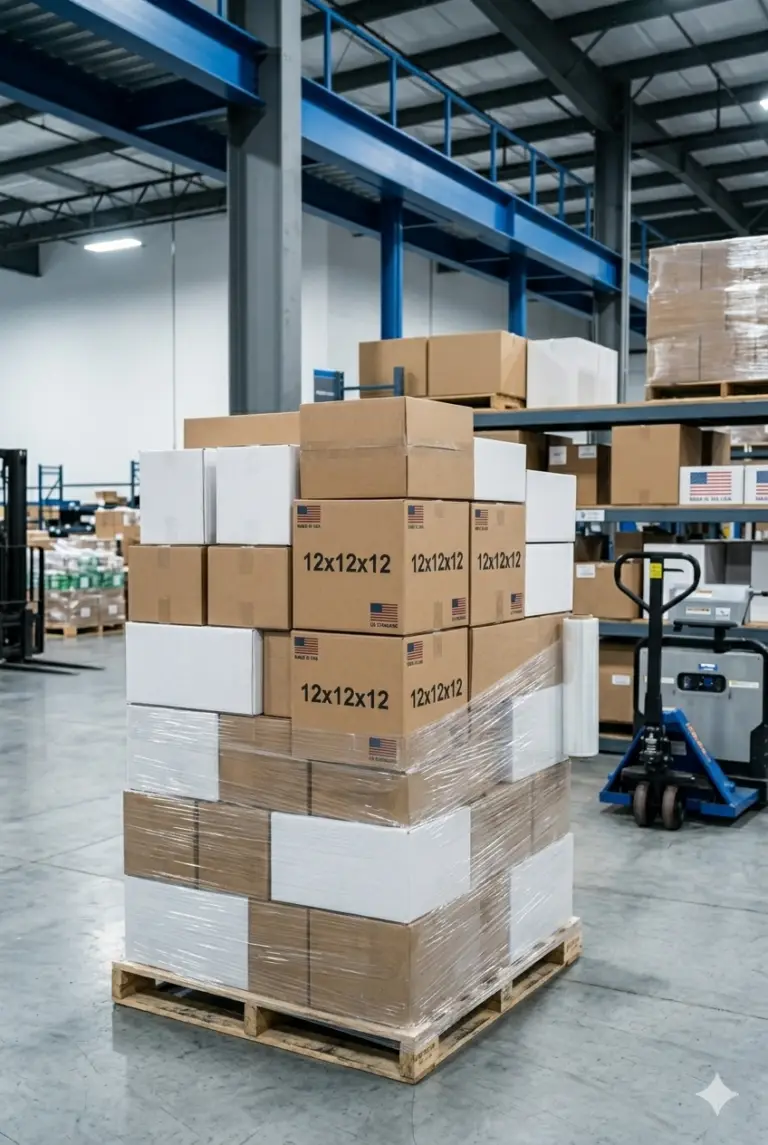
Bulk Procurement Strategies for US Businesses: Cut Costs 25% in 2026
In 2026, bulk buying isn’t about stacking pallets—it’s about strategic leverage. Rising logistics volatility, fragmented supplier ecosystems, and tighter working capital constraints mean that simply “ordering more” no longer guarantees margin improvement. Instead, profitability hinges on precision: knowing which products scale well, identifying suppliers who align with your operational cadence, and structuring deals that protect cash flow while accelerating inventory turnover.
This guide distills field-tested practices from US distributors and manufacturers who increased gross margins by 12-28% through disciplined bulk sourcing.
Why Bulk Sourcing Is Changing in 2026
Three structural shifts redefine what “bulk” means today for US businesses:
- Stabilized Lead Times – But Only for Verified Suppliers: Global lead times have stabilized, but this benefit applies primarily to pre-vetted suppliers with digital documentation trails. Customs compliance is now automated in over 70% of major trade corridors, meaning delays stem less from bureaucracy and more from incomplete supplier data.
- Tighter Payment Terms: Sixty-eight percent of Tier-2 manufacturers now require 30% upfront deposits, up from 42% in 2023, according to the 2026 Global Sourcing Pulse Survey.
- Group Purchasing Power: Small and mid-size US businesses are increasingly teaming up to access bulk discounts previously reserved for large corporations. By combining orders with complementary businesses, you can negotiate smaller minimums, waived service fees, or longer repayment terms.
The Cash-to-Cash Stress Test
Before placing any bulk order, run this calculation: determine how many days your working capital will be tied up—from deposit to first customer sale—and compare it against your average collection period. If the gap exceeds 45 days, renegotiate payment terms or reduce initial order size.
Identifying Products That Actually Benefit from Bulk Sourcing
Not all SKUs gain value when ordered in volume. The strongest candidates share three traits:
- Predictable demand (coefficient of variation under 0.35)
- Low obsolescence risk (no seasonal trends, tech dependencies, or regulatory sunset dates)
- Stable landed cost (±3% variance across six months of quotes)
Strong Bulk Candidates for Your Business:
| Product Category | Strong Bulk Candidate? | Key Validation Criteria |
|---|---|---|
| Corrugated boxes (standard sizes) | ✅ Yes | Demand steady for 24+ months; freight cost per unit drops 15-20% at pallet quantities |
| Stretch wrap (hand/machine grade) | ✅ Yes | Used across most orders; shelf life indefinite; volume discounts significant |
| Packing tape (case lots) | ✅ Yes | Standardized product; case quantities offer 18-25% savings vs. individual rolls |
| Paper towels & tissue | ✅ Yes | Consistent consumption; bulk pricing available; predictable reorder cycles |
| Custom-printed materials | ❌ No | MOQs often high; design changes can render inventory obsolete |
The Supplier Vetting Checklist for 2026
Gone are the days when factory photos and third-party audit reports sufficed. Today’s due diligence requires layered verification:
- ✅ Verify ownership structure: Cross-check business registration numbers with official government portals—not just supplier profiles.
- ✅ Confirm production capacity in writing: Request a signed letter specifying maximum monthly output for your specific SKU, including tooling time and labor allocation.
- ✅ Validate compliance documentation digitally: Ensure certificates are uploaded directly to verified platforms—not emailed PDFs you can’t trace.
- ✅ Test communication responsiveness: Send a technical query and measure response time, accuracy, and willingness to provide detailed specifications.
- ✅ Review bank reference history: Ask for two verifiable banking references—including account names matching the company registration.
The Five-Point Tiered Pricing Negotiation Model
Instead of negotiating one flat price per unit, adopt a dynamic structure that rewards mutual commitment. This model has reduced supplier churn by 44% among mid-market brands using it since 2025:
- Base Tier (Standard orders): Standard unit price, standard payment terms
- Commitment Tier (10,000+ units): 7-10% discount, priority production scheduling
- Forecast Tier (25,000+ units): 12-15% discount, freight rate locked for 6 months
- Partnership Tier (50,000+ units): 18-20% discount, split payment terms, joint planning
- Performance Bonus: Additional 2% rebate quarterly if on-time delivery exceeds 98.5%
Case Study: How a US Distributor Cut Costs 21%
A mid-sized US packaging distributor supplying e-commerce brands sourced corrugated mailer boxes from three separate Chinese factories in 2024. Each order was placed individually, with 45-day lead times and 50% upfront payments. By mid-2025, rising sea freight rates and currency fluctuations pushed their landed cost up 14%.
In Q1 2026, they consolidated orders into a single annual contract with one vetted supplier, negotiating:
- 12% unit discount for committing to 120,000 units/year
- Staggered deliveries every 45 days to match warehouse capacity
- 20% upfront + 30% on shipment + 50% on receipt
- FOB-to-door insurance and customs brokerage included
Result: Landed cost dropped 21% year-over-year. Inventory turnover improved from 4.2x to 6.8x, and administrative overhead decreased by 17 hours/month.
Group Purchasing – The Small Business Advantage
If your volume doesn’t justify bulk discounts alone, consider group purchasing. Small businesses may pay more for supplies simply because they lack access to the same volume discounts as large corporations. Group purchasing power changes that.
How to Join or Create a Group Purchasing Network:
- Pinpoint Shared Spending Opportunities: List goods and services other similar businesses might purchase as well.
- Connect with Buying Partners: Look for local businesses, trade associations, chambers of commerce, and industry networks.
- Set Clear Terms: Create agreements defining payment schedules, delivery timelines, and dispute-resolution procedures.
- Simplify Payments: Use treasury management services to automate payments and maintain organized records.
What You Can Buy Together:
- Office supplies
- Janitorial products
- Packaging materials
- Industry-specific goods
- Even health insurance through trade associations
Optimizing Packaging Supply Chains
Efficiency and cost-effectiveness are critical in packaging supply chains. Businesses seeking to reduce expenses while maintaining quality should consider these strategies:
Optimizing Material Usage:
One of the most effective ways to reduce costs is to optimize material usage. Overuse of materials increases costs and contributes to unnecessary waste. By adopting lightweight materials and optimizing packaging dimensions, companies can achieve significant savings in both raw materials and transportation.
Streamlining Logistics:
- Consolidate shipments to reduce transportation expenses
- Optimize load capacities to minimize empty space
- Adopt just-in-time inventory management with robust coordination
- Implement warehouse management systems for real-time tracking
Embracing Sustainable Solutions:
Sustainability is now a key driver of cost reduction. Switching to recyclable materials lowers waste disposal costs while meeting consumer demand. Energy-efficient manufacturing processes and renewable energy adoption can significantly cut electricity costs over time.
Calculating Your Operational MOQ
Avoid MOQs based solely on supplier convenience. Calculate your operational MOQ: the smallest quantity that delivers positive cash flow within 90 days of receipt.
The Formula:
If your average order value is $89 and gross margin is 52%, you need to sell approximately 1,100 units to cover a $50,000 bulk order. If your 90-day sales forecast for that SKU is 1,350 units, the MOQ is viable. If it’s 720 units, walk away—even with a 20% discount.
Conclusion: Start Small, Scale With Discipline
Bulk buying in 2026 rewards patience, specificity, and process—not ambition alone. Pick one SKU with stable demand and moderate margin pressure. Apply the supplier vetting checklist. Run the cash-to-cash stress test. Measure actual landed cost—not just invoice price—and track inventory turnover weekly.
Profitable bulk sourcing isn’t found in the lowest unit price. It’s embedded in the alignment between your sales velocity, your supplier’s execution discipline, and your finance team’s ability to optimize working capital.