Stretch Wrap Specifications Guide: Gauge, Width, and Performance for US Warehouses
Stretch wrap is essential for pallet stability, but with so many options—gauges, widths, cast vs. blown, hand vs. machine grade—selecting the right film can be overwhelming. This guide breaks down stretch wrap specifications to help US warehouses and manufacturers make informed purchasing decisions.
Understanding Stretch Wrap Basics
What Is Stretch Wrap?
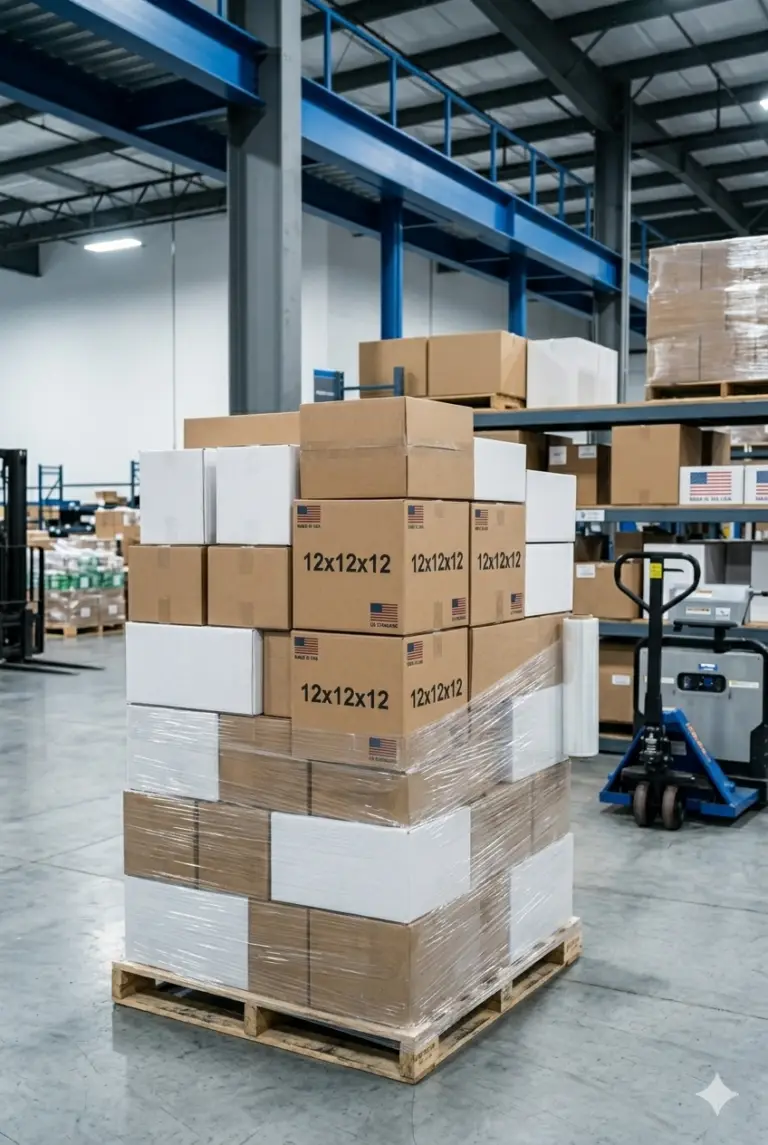
Stretch wrap (also called stretch film) is a highly stretchable plastic film used to wrap around products on pallets. It unitizes loads, protects from dust and moisture, and prevents tampering during transport.
Key Performance Characteristics:
- Cling: Ability to stick to itself without adhesive
- Memory: Tendency to return to original size after stretching
- Puncture resistance: Ability to withstand sharp corners
- Tensile strength: Maximum force before breaking
- Stretch percentage: How far the film can stretch before breaking
Gauge: What It Means and Why It Matters
Gauge (or mil thickness) measures film thickness. One mil equals 1/1000 of an inch.
Common Gauges and Applications:
| Gauge | Thickness | Typical Applications |
|---|---|---|
| 50-60 ga | 0.5-0.6 mil | Light loads, uniform boxes, hand wrap |
| 70-80 ga | 0.7-0.8 mil | Standard duty, mixed pallets, hand or machine |
| 90-120 ga | 0.9-1.2 mil | Heavy loads, sharp edges, machine grade |
| 120+ ga | 1.2+ mil | Extreme loads, industrial applications |
Gauge vs. Performance
Modern resin technology means 80-gauge film can sometimes outperform older 120-gauge films. Don’t choose by gauge alone—consider performance data.
Width Selection
Common Widths:
- 12-15 inches: Hand grade, smaller pallets, bundling
- 18-20 inches: Most common for hand and machine grade
- 30-40 inches: Machine grade, extra-wide applications
- 50-60 inches: Extra-wide portable, specialty equipment
Width Selection Rule:
Film width should match pallet height. For a 48-inch pallet, 20-inch film typically requires 2-3 wraps. Wider film covers faster but may waste material on smaller loads.
Cast vs. Blown Stretch Film
Cast Stretch Film:
- Manufacturing: Chill roll process, quick cooling
- Advantages: Superior clarity, quiet unwinding, consistent thickness, better cling
- Best for: Uniform loads, noise-sensitive environments, applications requiring barcode scanning
- Limitations: Less puncture resistance than blown
Blown Stretch Film:
- Manufacturing: Extruded through circular die, “blown” into bubble
- Advantages: Higher puncture resistance (20-30% better), better load retention, performs well in extreme temperatures
- Best for: Irregular loads, sharp edges, heavy items, temperature extremes
- Limitations: More noise during unwinding, less clarity
Hand Grade vs. Machine Grade
Hand Grade Stretch Wrap:
- Roll size: 12-18 inches wide, 1,000-2,000 feet long
- Application: Manual wrapping, hand dispensers
- Best for: Low to moderate volume (under 40 pallets/day), variable load sizes
- Stretch percentage: Typically 50-150%
Machine Grade Stretch Wrap:
- Roll size: 20-30 inches wide, 4,000-9,000 feet long
- Application: Automated or semi-automated equipment
- Best for: High volume (40+ pallets/day), consistent loads
- Stretch percentage: Up to 250-300% with pre-stretch equipment
Specialty Stretch Films
UV-Resistant Film:
Contains UV inhibitors for outdoor storage. Prevents degradation from sunlight exposure.
Color-Coded Film:
Available in various colors for organization, security, or marketing.
- Black: Conceals products, UV protection
- Blue: Common for general use
- Green: Often used for eco-friendly messaging
- Red/Orange: Warning or high-visibility applications
Anti-Static Film:
Dissipates static electricity. Essential for electronics and sensitive components.
VCI (Volatile Corrosion Inhibitor) Film:
Protects metal parts from rust during storage and transport.
Pre-Stretched Film:
Mechanically stretched during manufacturing. Requires less force to apply, reduces worker fatigue.
Stretch Wrap Additives
Degradable Additives:
Help film break down faster in landfills. Important for sustainability goals.
FDA-Grade Materials:
For food contact applications. Must meet specific regulations.
High-Cling Additives:
Increase film-to-film adhesion. Useful for loads that shift during transport.
Calculating Roll Yield
How Many Pallets Per Roll?
Pallets Per Roll = (Roll Length × Stretch Percentage) ÷ (Average Feet Per Pallet)
Example:
1,500-foot roll, hand-applied at 50% stretch, 30 feet per pallet = 75 pallets per roll
5,000-foot roll, machine-applied at 200% stretch, 30 feet per pallet = 500 pallets per roll
The machine-grade film costs more per roll but delivers far more pallets—lower cost per pallet.
Storage and Handling Tips
- Store vertically: Prevents roll deformation
- Keep in original packaging: Protects from dust and UV
- Avoid temperature extremes: High heat can soften film, cold can make it brittle
- Use within 2 years: Film can degrade over time
- Rotate inventory: Use older stock first
Common Stretch Wrap Mistakes
- Using wrong gauge: Too thin fails, too thick wastes money
- Inconsistent tension: Overstretching weakens film, under-stretching wastes material
- Ignoring load factors: Sharp edges require puncture-resistant film
- Poor storage: Heat and UV damage film before use
- Not testing: Every load type should be tested with new film
Cost-Per-Pallet Analysis
The cheapest roll often isn’t the most economical. Calculate cost per pallet:
Cost Per Pallet = (Price Per Roll) ÷ (Pallets Per Roll)
Example Comparison:
- Budget film: $40 per roll, 50 pallets per roll = $0.80 per pallet
- Premium film: $75 per roll, 120 pallets per roll = $0.63 per pallet
The premium film saves 21% per pallet despite costing almost twice as much per roll.
Conclusion
Selecting the right stretch wrap involves balancing gauge, width, film type, and application method. By understanding these specifications and calculating true cost per pallet, US warehouses and manufacturers can optimize their pallet wrapping operations for both performance and profitability.